
South St. Paul City Directory Holdings
South St. Paul’s historical listings are kept across library and archive collections, not in one complete resident roll. Saint Paul Public Library is the strongest published starting point for the regional run. Dakota County Historical Society adds local census, plat, cemetery, obituary, and church material. The Lawshe Memorial Museum in South St. Paul supplies a local research setting for directories, telephone books, newspapers, maps, and original historical material. Each city directory source answers a slightly different question, so a careful search records both the collection and the date.
| Collection | Years or scope | Where held | Access route |
|---|---|---|---|
| SPPL city directories | 1856 to present in changing formats | George Latimer Central Library | Digital collection, microfiche, microfilm, and print |
| Suburban directory series | 1956 to 1991 | SPPL | South and North Suburban editions |
| DCHS census holdings | 1849 to 1940 | Lawshe Memorial Museum and DCHS search | Partial online search and research help |
| DCHS plat holdings | 1879 to present | Lawshe Memorial Museum | Research library and appointment route |
| Newspaper and obituary material | Varies by title and collection | Lawshe, DCHS, and MNHS | Microfilm, online hubs, and archive research |
A directory find shows that a person or business was listed at that edition’s date. It does not prove ownership, a full household, or continuous residence. Use the street, census, obituary, or deed trail to test those separate questions.
Choose a South St. Paul Directory Year
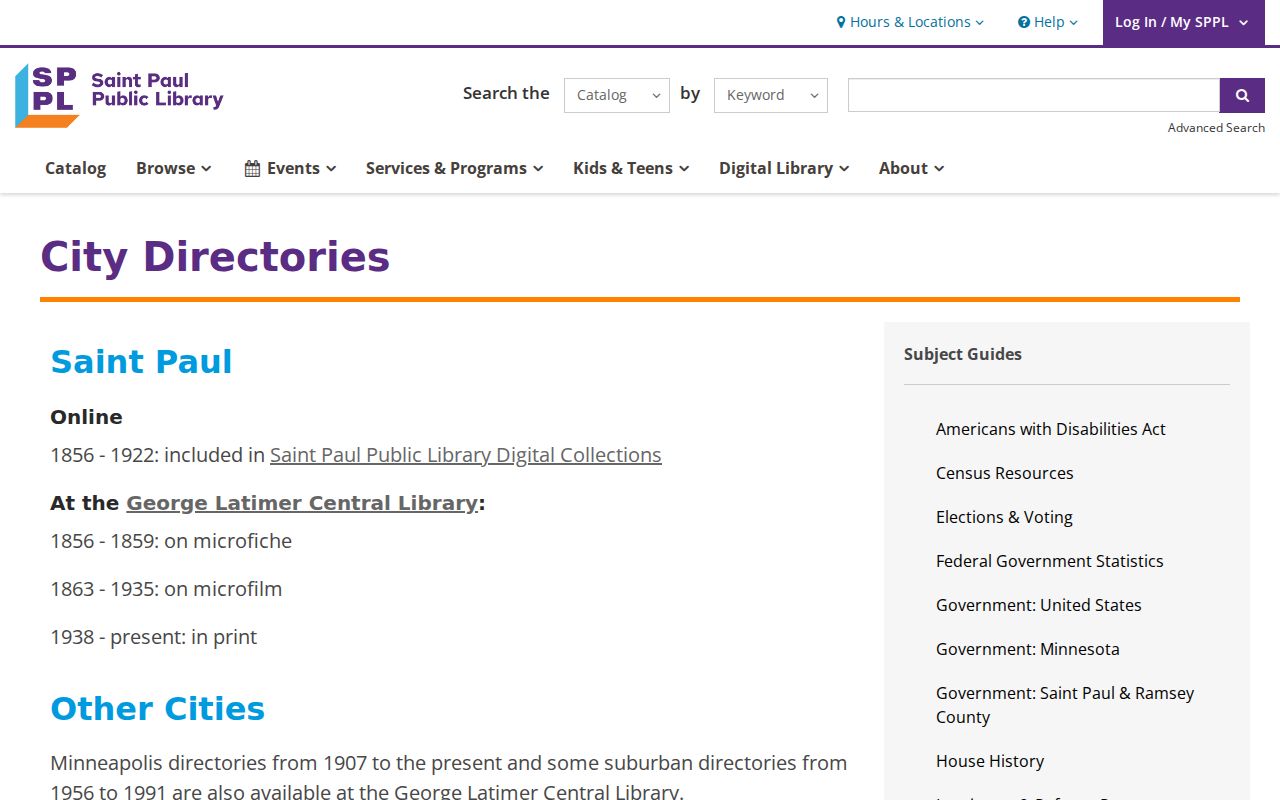
SPPL makes the changing formats plain. Digital city directories are available from 1856 through 1922. At George Latimer Central Library, the 1856 to 1859 books are on microfiche, the 1863 to 1935 run is on microfilm, and 1938 to present is in print. The library also keeps the 1956 to 1991 suburban series. Print-directory photocopies are not permitted, while microfiche and microfilm copies can be made. Start with the edition closest to a known life event, then move one year at a time when the name or street entry changes.
SPPL’s digitized city-directory collection is the online entry point for the earlier run.
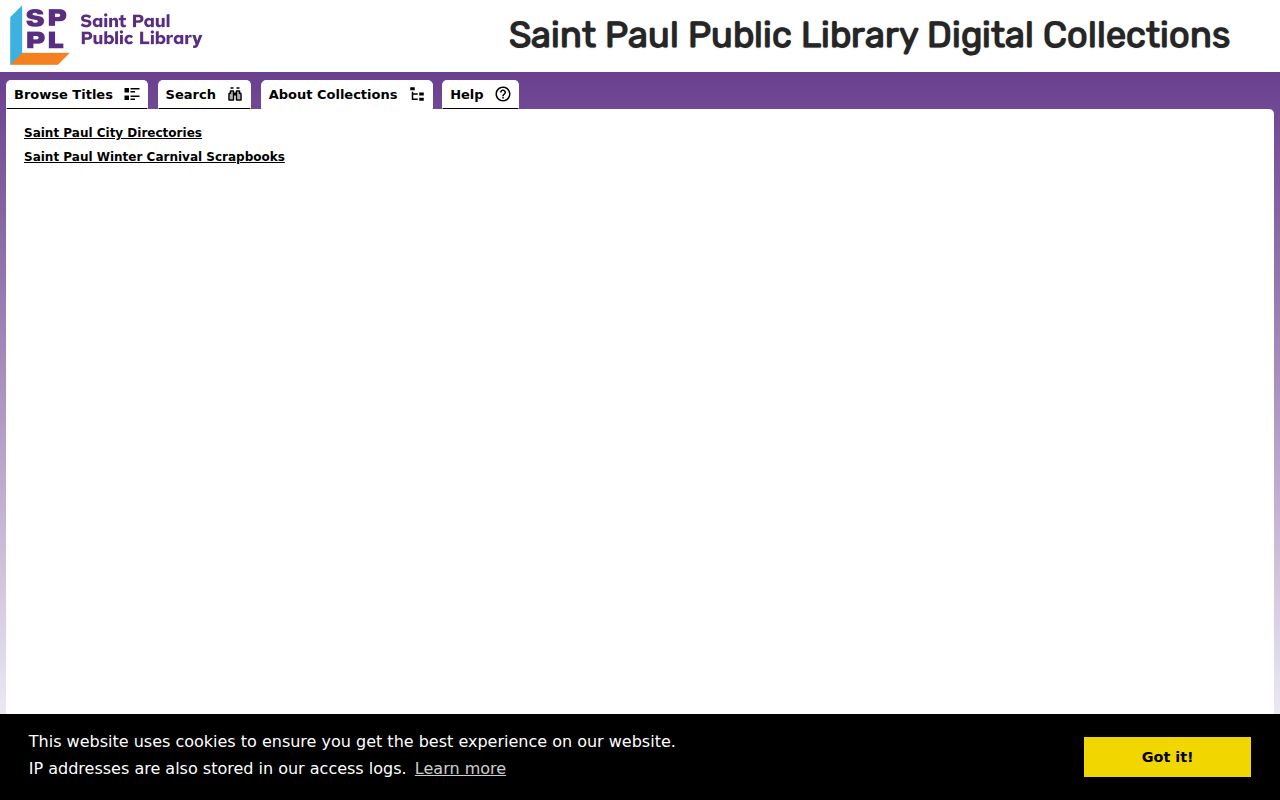
The online viewer is useful for locating an edition, but the edition’s title page, index instructions, and the page containing the entry all matter. Keep a note of the format used, especially when moving between digital, microfilm, and print copies.
South St. Paul Directory Entries Decoded
Read an entry as a compact, dated note. Early books can give a street name without a house number and may identify an occupation or business type. Later editions add more tools. The 1929 book can mark a homeowner, include a wife’s name, and pair the name list with a separate street index. The 1933 edition lists all adults, while later books add telephone clues. These details are useful only after the researcher checks the instructions printed in that particular volume.
| Entry part | What it can show |
|---|---|
| Name section | A listed person or business at the edition date |
| Street and number | Address detail when the edition supplies it |
| Occupation or type | Work or business wording printed by the directory, not a full biography |
| Household clues | Wife’s name or all-adult listing in editions that use those conventions |
| Telephone clue | A bell indicator or later telephone section when provided |
- Criss-cross directory
- A listing arranged by street and address rather than by surname, useful for checking the names printed at one location.
- Householder index
- A name-led section that directs a searcher to an individual or household listing in the year covered.
- Abbreviation key
- The instructions, often near the beginning of a volume, that explain the marks and shortened words used in entries.
1929 South St. Paul Directory Clues
The 1929 edition deserves special care because it has several local conventions at once. A dotted circle marks a homeowner. Wives’ names appear. A pink street index is included, with a separate South St. Paul street index, while South St. Paul residents appear in the St. Paul white pages. Those signals can help sort a name result from an address result, but none should be stretched beyond the entry itself. A homeowner mark is a directory convention for that edition, not a substitute for a deed or title record.
Saint Paul Public Library’s city-directories guide describes the format changes and the South St. Paul notes that make this edition distinctive.
Photograph or transcribe the volume’s front-matter instructions before copying a name. The meaning of a dot, bell, street section, or telephone entry changes with the book, and that context is part of the evidence.
South St. Paul Directory Shifts
Directory formats changed as the city and the regional series changed. In 1866, ward listings appear. A street index with “to” and “from” directions arrives in 1879, and house numbers appear in 1885. The 1895 volume adds “Progress of City.” Much later, 1940 uses a bell as a telephone indicator without printing a number. The 1948 South St. Paul street directory was dropped from the sequence SPPL describes, 1961 adds phone numbers to the street index, and 1964 has a separate telephone section.
| Period | South St. Paul research signal |
|---|---|
| 1856 to 1925 | Names, businesses, civic listings, and changing address detail |
| 1929 to 1940 | Homeowner, spouse, all-adult, and telephone-indicator conventions |
| 1956 to 1991 | Separate suburban directory series |
| 1961 to 1964 | Street-index phone numbers and a separate telephone section |
The city’s 1887 incorporation, industrial growth, and later urban change also make date matching important. Historical neighborhood names such as North End, South Park, Central, Roosevelt, South End, Messer Street Flats, and Oak Park can be useful search terms in an archive or newspaper, but they are historical context rather than a current resident classification.
South St. Paul Directory Research Desk
The Lawshe Memorial Museum at 130 3rd Avenue North is the most local place to extend a directory trail. Its research library holds city directories, telephone books, newspaper microfilm back to the 1850s, census material from 1849 to 1940, cemetery and obituary records, church and naturalization records, and plat maps showing ownership from 1879 to present. Appointment is encouraged but not required. Calling 651-552-7548 first lets staff confirm whether a particular directory edition, plat, or obituary file is available.
Bring the exact name, address, and date range. Record the collection title, volume, page, or box reference with the result. Research assistance is free for members, and the museum states a suggested $15 per half hour donation for nonmembers. The local collection is broad, but it is not a complete list of everyone who lived in South St. Paul.
Trace Families in South St. Paul Directories
Use a directory sequence to test a family story one date at a time. A street listing can lead back to the name section. A census can add a household snapshot. Newspapers, cemetery records, church material, and obituaries can then supply life events that a directory leaves out. For a historical name that needs a separate current-record check, use the South St. Paul resident lookup route rather than treating an old listing as current information.
- Find the first plausible name entry and save the edition year, page, and section.
- Check nearby editions for a changed spelling, address, spouse clue, adult listing, or telephone convention.
- Use the street index when the edition has one, then note the printed names at the address.
- Pair the directory date with the closest available census, newspaper, church, cemetery, or obituary record.
- Use plat and deed material only for the separate property question, keeping party roles distinct from residence.
Disappearance from a listing has several possible explanations: a move, death, an omitted person, a missing edition, a changed street number, or a different directory boundary. A no-result needs a second source before it becomes a conclusion.
South St. Paul Directory Gaps
Digital access does not erase the archive route. The earlier SPPL digital viewer did not supply a usable page during the captured access check, and no complete online South St. Paul name database was located. DCHS Search Records has more than half a million searchable local records, including church, cemetery, census, and WWI biography material, but its online set is not complete. Use its keyword box and record-type selector as leads, then send a research request or visit the museum when a date or collection is missing.
A separate South St. Paul Sanborn title or sheet set was not located in the official sources. The Library of Congress volumes are titled for St. Paul, so their individual sheet coverage must be checked before using them for South St. Paul. The same care applies to street renumbering: no authoritative local timeline was located, so a number mismatch should remain unresolved until an archive or city record supplies the change.
South St. Paul Stockyards Records
The Saint Paul Union Stockyards collection offers a separate local-person trail for research connected to the city’s industrial past. The Minnesota Historical Society finding aid covers 1886 to 1982, with most material from 1903 to 1974. It includes personnel files mainly from the 1930s to 1950s, minutes, financial material, stockholder records, and appraisal records from 1919, 1923, and 1956. Some records have restrictions and may require onsite or request access.
Those files can connect a named person to a historical institution only after the relevant archival record is reviewed. Ask the archive about the relevant date, file type, and access condition rather than assuming that a name will appear in a general search. Personnel references, stockholder material, and appraisals answer different questions and should not be merged into one household story.
The collection does not supply a complete personnel or resident list, or a substitute for a South St. Paul city directory. Use the collection title, date, and archival reference alongside any name found there. A directory, census, or obituary record from the same period can add context without turning a single archival mention into proof of residence.