
Find South St. Paul Residents
A solid resident lookup starts with a detail you can verify. Don't rely on a broad name match. An address leads to the county parcel map. A current court question belongs in the court index. A family history question fits a dated directory, census, newspaper, or museum collection instead. These sources overlap, yet none of them proves residency on its own. A deed may name a lender or an attorney rather than an owner. A directory entry places a person at one address for one edition only. A city archive hit might just be a council document. Note down the date and source of anything you find.
Dakota County publishes no single public name list covering all South St. Paul residents. The strongest evidence usually comes from combining an address-based parcel search with a dated historical source. It also helps to check with the custodian office. When one specific person is the target, the South St. Paul resident lookup route keeps each piece of evidence separate and honest.
- Enter the exact street address or parcel ID in Dakota County Property Information and save the parcel ID, municipality, legal description, and access date.
- Use the name, address, or date range in the record system that matches the event, such as the city archive, MCRO, or a historical directory.
- Check the recorder index when the parcel trail needs a dated deed or other recorded instrument. RecordEASE requires an account for the full search.
- For an earlier household, compare the SPPL street or name section with DCHS census, obituary, newspaper, or plat material.
- When an online result is incomplete, ask the named custodian for a narrow record set, date range, and inspection or copy option.
South St. Paul Resident Records Offices
South St. Paul keeps its municipal records at City Hall, while land, elections, and most court functions rest with Dakota County. That division shapes every search. The City Clerk holds city papers, minutes, ordinances, licenses, and public-data requests. Recorded land documents sit with Dakota County Property Taxation & Records, and the county map adds the parcel context that makes any address search precise. The election office can pin down a precinct from an address, though its public tool was never built as a household-name search.
Dakota County Property Taxation & Records
1590 Highway 55
Hastings, MN 55033
651-438-4597
Dakota County Property Information
Western Service Center
Apple Valley, MN
952-891-7081
Property Taxation & Records takes document and research requests by mail, appointment, phone, and email. Two public Property Information terminals are available at the Western Service Center. For municipal papers and city requests, the City Clerk remains the best first call. These in-person and mailed routes matter. They help whenever a web search does not surface an older item or a certified copy.
South St. Paul Parcel Records
For a South St. Paul address, the Dakota County Property Information Search is the cleanest first stop. Its documented public modes are street address and parcel ID, not owner name. The map opens a printable property card. It shows tax material, valuation notices, sketches, and broader map context. Before moving on to a deed or directory, save the situs address, parcel ID, municipality, and legal description. Keep in mind that a mailing address can differ from the property address.
| Property search control | Use in a South St. Paul search |
|---|---|
| Street address | Begin with the house number and street, including the correct directional and street type. |
| Parcel ID | Use the stable county identifier once an address result is found. |
| Layers and basemap | Check parcels, roads, aerials, contours, parks, and floodplain context. |
| Print property card | Keep the date and parcel reference with any downloaded record. |
The county's Online Property Maps page describes the county GIS and roughly 150 available layers. Treat it as an orientation tool rather than a title opinion or a current-resident roster. Once a parcel is identified, the South St. Paul street directory completes the address-by-address chain. Need a map download? Is a property-card search unavailable? The Map Catalog is the place to check.
South St. Paul Court Lookup
Court records form a separate strand of the South St. Paul residents directory. Dakota County District Court relies on Minnesota Court Records Online for statewide case, document, hearing, and judgment searches. The system is known as MCRO. The Case Search allows a name type selection, entry of last, first, and middle names, and a date of birth or filing-date range. A category or court location can be added. A Sounds Like or wildcard attempt is also possible. Select Dakota County whenever a location filter helps.
MCRO is free and needs no registration. It is unofficial, though, and cannot issue certified copies. Pending criminal and traffic matters do not return by defendant name before conviction. Protected, expunged, destroyed, older, and local-only material may also be missing. For a certified copy or an unavailable file, the fallback is the courthouse. Court administration and a public-access terminal also serve this purpose. A missing online result is never a conclusion about a person. Use the official MCRO Case Search for the documented field set.
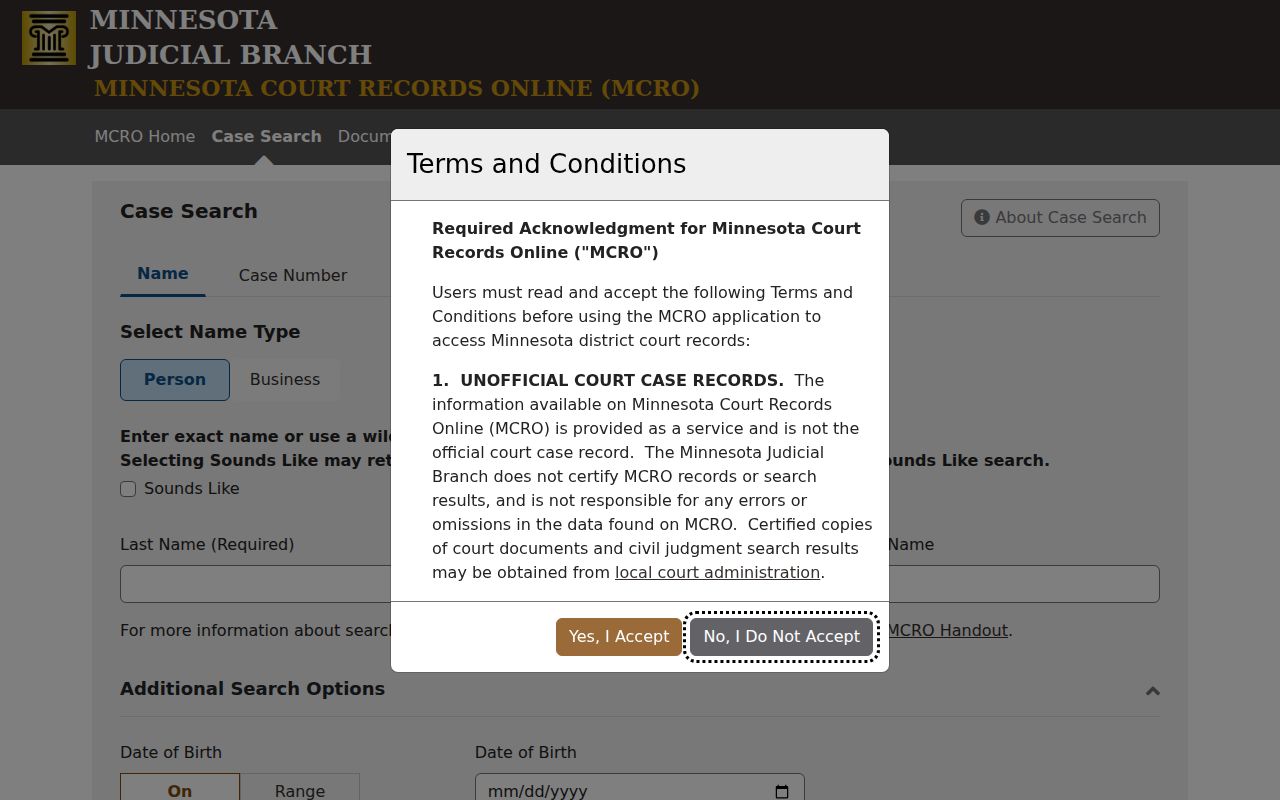
Run separate exact-name, wildcard, punctuation, suffix, and Sounds Like searches before trusting any single spelling as complete.
South St. Paul Voter Data
Minnesota splits its election lookups across two levels. At the county level, Dakota County's Find My Polling Place takes a street address and returns precinct and polling-place details. It confirms geography well. It does not name the voters registered there. The statewide voter list lives with the Secretary of State under Minn. Stat. §201.091, which requires restricted fields to be removed and sets controlled formats, fees, certification, and delivery options.
A personal records request works best when it names a specific geography and product rather than a broad name file. The state form lists geographic products at $30 and statewide output at $46, with five-business-day fulfillment described on the form. Verify the current form before submitting. A protected participant may hold confidential voter status, so treat a missing response or a substitute address with respect rather than trying to work around it. For its address-first design, start with the county polling-place lookup.
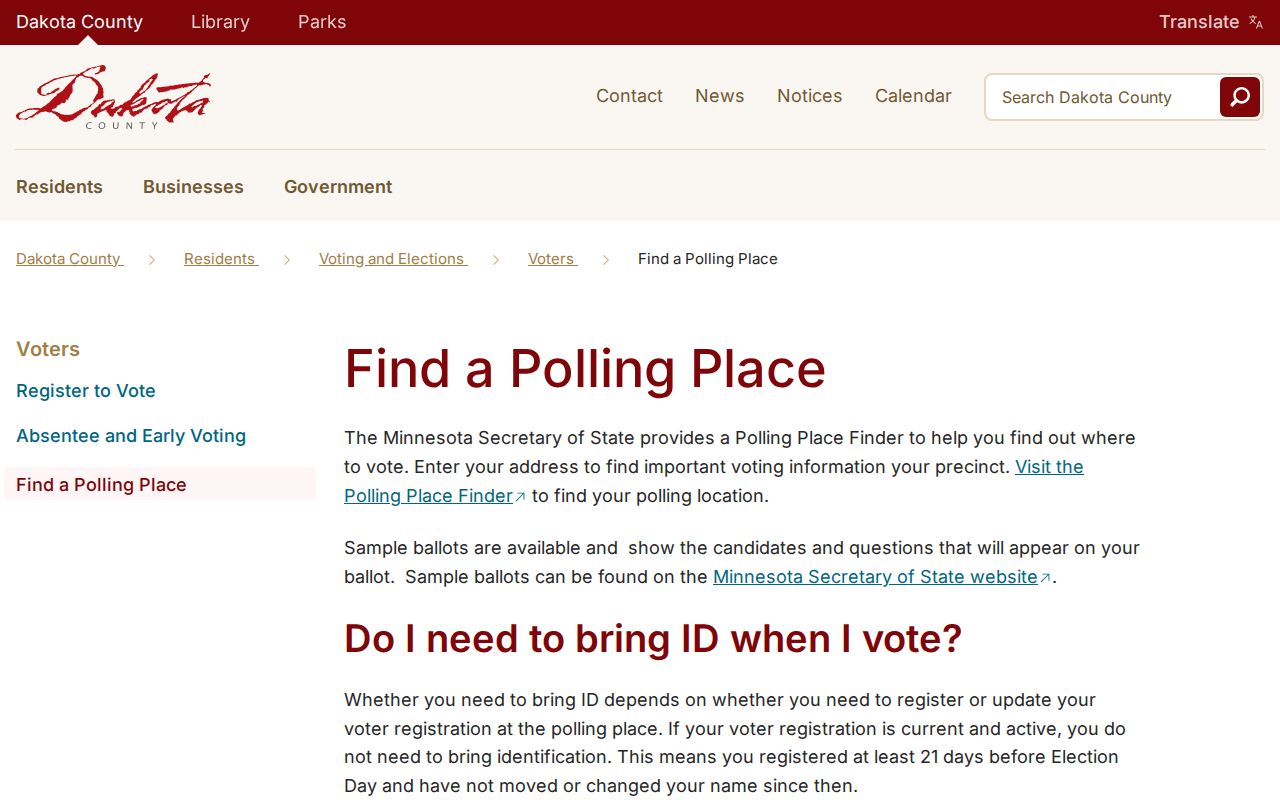
The result connects an address to precinct geography, not a list of people.
Current South St. Paul Resident Directories
Several current systems look like a residents directory at first glance. Each serves one narrow purpose. A parcel result ties land to an address. RecordEASE lists parties to recorded instruments. The city staff directory covers employees, not households. A court or license index answers a case or credential question. Matching each source to its role keeps a South St. Paul result from claiming more than the custodian intended.
| South St. Paul source | Record relationship | Custodian | Access route |
|---|---|---|---|
| Property Information | Parcel, situs address, tax and map context | Dakota County | Free address or parcel search |
| RecordEASE | Recorded-document parties and references | Property Taxation & Records | Account, office, copy request |
| City Archive | Names or addresses in municipal documents | South St. Paul | Keyword, type, time, date range |
| Voter file request | Public voter-list data permitted by law | Secretary of State | Request form and delivery controls |
| DCHS Search Records | Church, cemetery, census and local entries | Dakota County Historical Society | Partial online search and research help |
A commercial residents directory can be convenient. It may also merge old, incomplete entries. Mismatched entries can slip in without naming the custodian or the date. Official indexes make the record type, access limit, and update point clear. That clarity matters for genealogy, estate questions, reconnection, and civic research.
| Official record route | Commercial directory category |
|---|---|
| Names the office, source date, record type, and request path. | May combine sources with unclear timing or relationship. |
| Allows a copy, inspection, or custodian follow-up when offered. | Cannot replace a custodian’s confirmation or certified copy. |
South St. Paul City Archive
The South St. Paul City Archive offers keyword search, archive-type filters, time-period and date-range controls, and browse options. It suits a municipal hunt where a name, organization, street, ordinance, license, or meeting topic is already known. Keep the archive category and date with every hit. A name can surface as a speaker, applicant, official, vendor, or subject inside a council item. The document itself tells you what the result means.
The City Clerk at South St. Paul City Hall holds city papers, agendas, minutes, ordinances, resolutions, licenses, elections, and public-data requests. Published regular hours run Monday through Friday, 8:00 a.m. to 4:30 p.m. A seasonal summer schedule is also posted. A gap in the online archive does not end the search. Office, phone, mail, and request channels all remain open through the clerk. Before filing a narrow municipal request, open the City Clerk office page.
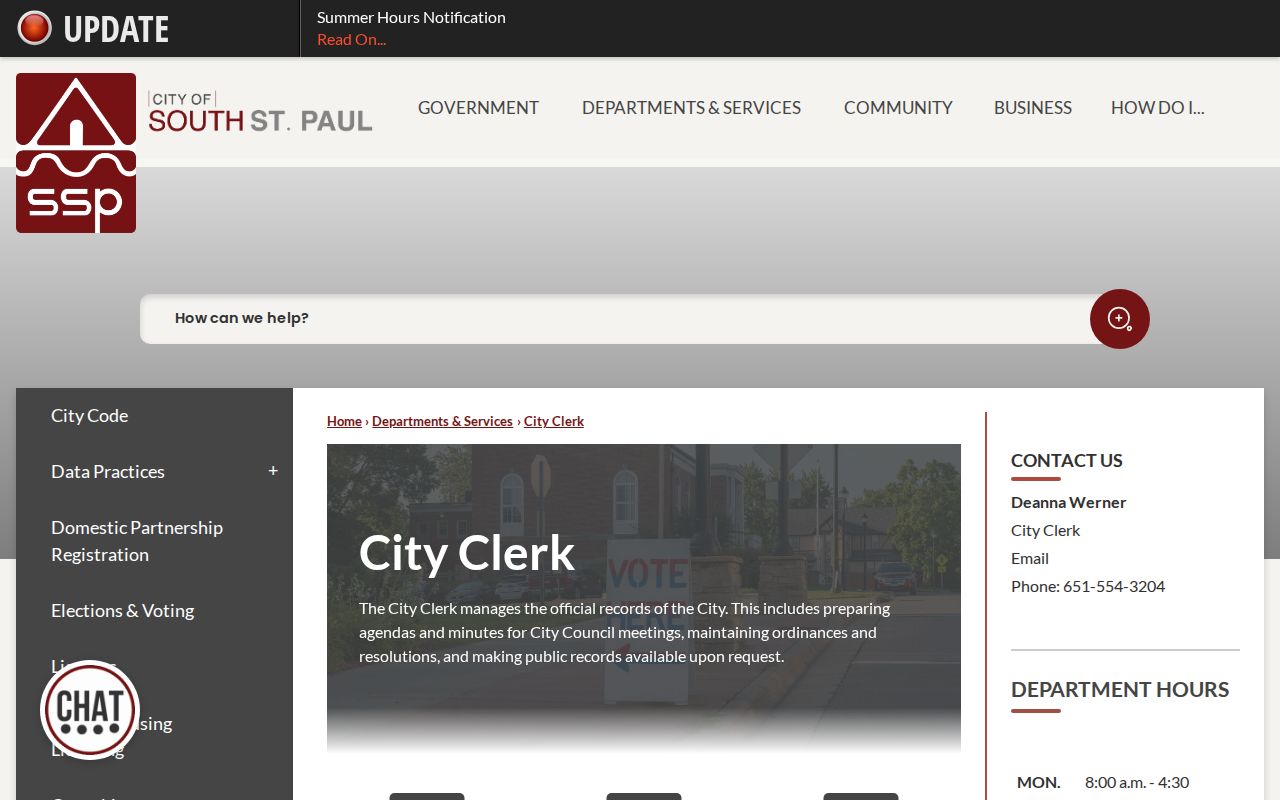
Municipal records can trace a document trail, but the city archive is no general roster of South St. Paul residents.
South St. Paul Vital Trails
Vital records run through a separate state and county system. The Minnesota Department of Health keeps statewide birth records from 1900. It keeps death records from 1908. Dakota County issues Minnesota death certificates and county marriage copies. Marriage copies come from the county that issued the license. Divorce decrees belong with the district court. The MDH death verification search demands an exact first name, last name, and date of birth. Alternatively it accepts a Social Security number. It returns limited verification information, not a certificate.
Minn. Stat. §§144.225 through 144.227 govern public and confidential vital data, certified-copy eligibility, and administration. Noncertified death information is public. Certified copies require the relationship or legal basis, identification, and attestation the custodian describes. MDH accepts mail and fax but no emailed applications. Dakota County's certified-death route offers in-person and mail options. Treat an index result as a lead. Then use the eligible route for an actual copy. Check the official Minnesota death search before leaning on exact-match verification.
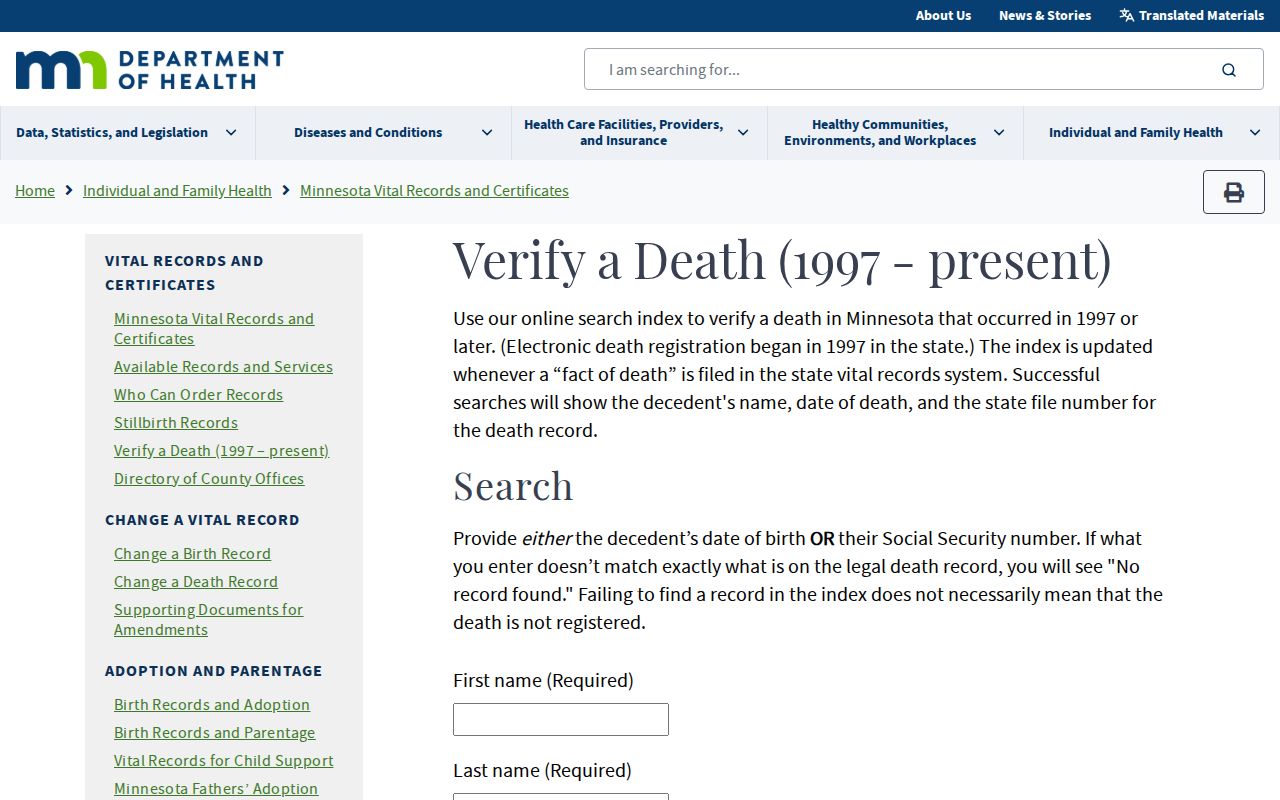
The visible fields explain why a partial name alone cannot drive this verification tool.
South St. Paul Resident Privacy
Public access to a record is not permission to build an unrestricted profile. The Minnesota Government Data Practices Act, Minn. Stat. ch. 13, presumes government data are public unless another law classifies them otherwise. Inspection is free. Copies may carry an actual-cost charge. A strong request names the record type, date range, name or address, format, and whether inspection or copies are wanted. Narrow requests cut cost and privacy review at once.
- Roll
- A list created for a particular public purpose, not a universal resident list.
- Index
- A finding tool that points to a record; it is not always the original document.
- Parcel
- A county-defined piece of land identified by a parcel ID and legal description.
- Criss-cross directory
- A historical directory arranged by street or address rather than by surname.
Safe at Home is Minnesota's address-confidentiality program. A participant may use a substitute address and receive confidential voter treatment. Sealing, protected-address, and court rules add further gaps, so never read a missing address as a puzzle to solve.
Historical South St. Paul Resident Directories
Dates come first in historical directory research. Pin the year and the trail narrows fast. Saint Paul Public Library posts digital city directories for 1856 through 1922, and it keeps later volumes on microfiche, microfilm, and print. The 1929 edition adds a distinct South St. Paul street index. South St. Paul names also show up in the St. Paul white pages. Then comes the 1956 to 1991 suburban run, a series of its own.
Formats changed over time. So note the edition, page, section, spelling, and whether an entry came from the name side or the street side. The South St. Paul Directory Book details the library runs, entry conventions, and household tracing method. Scope is the key point. A listing only proves that a named person or business appeared in that edition, not ownership, a complete household, continuous residence, or an unchanged street number. A miss can mean several things. It might reflect a lost volume, a boundary shift, a wrong section, or an adult-only listing convention.
South St. Paul Lawshe Records
The Lawshe Memorial Museum fills the gap a web search leaves. Dakota County Historical Society runs it at 130 3rd Avenue North in South St. Paul. Its shelves hold local histories, plat maps, telephone books, city directories, oral histories, and photos. Newspapers run on microfilm back to the 1850s. Census material spans 1849 to 1940. Cemetery files, obituaries, naturalization papers, and Catholic church records round out the collection. Appointments are encouraged, though not required. Staff ask researchers to call first at 651-552-7548.
DCHS also offers a partial online Search Records system with a keyword field and a record-type selector. It opens more than half a million entries. Those span church, cemetery, census, WWI biography, and other local records. The online set is not complete. A no-result should point to a museum inquiry, a research request, or a check of SPPL and Minnesota Historical Society holdings, never to a claim that someone was absent from South St. Paul.
South St. Paul Recordkeeping Eras
South St. Paul formed in 1887. The stockyards era, later closure, and redevelopment each reshaped its record trail. Early street and property questions may need directories, plats, newspapers, recorder books, or city archives. Directory detail shifts by era. From 1929 through 1940, the library notes a homeowner symbol, wives' names, all-adult listings, and a telephone indicator; the 1950 to 1970 years add suburban directory and phone-number context. GIS, ePermits, MCRO, and the municipal archive belong to the later digital era.
The county's Mapping Prejudice layer adds one historical parcel lens. Dakota County calls its map complete for discriminatory covenants. It is a land-history tool, not a resident label. Pair it with the recorded document and parcel date before drawing any conclusion about a current household in South St. Paul.
South St. Paul Custody Searches
Custody and criminal-history records sit apart from resident lookups. The Dakota County Jail Inmate Search covers current custody only. The sheriff warns that results may not be current, accurate, or complete. State Department of Corrections and BCA paths carry separate jurisdictions. They also impose status rules and identity limits. Court records add their own access limits. Open the official Dakota County Jail search only when its current-custody scope matches your question.
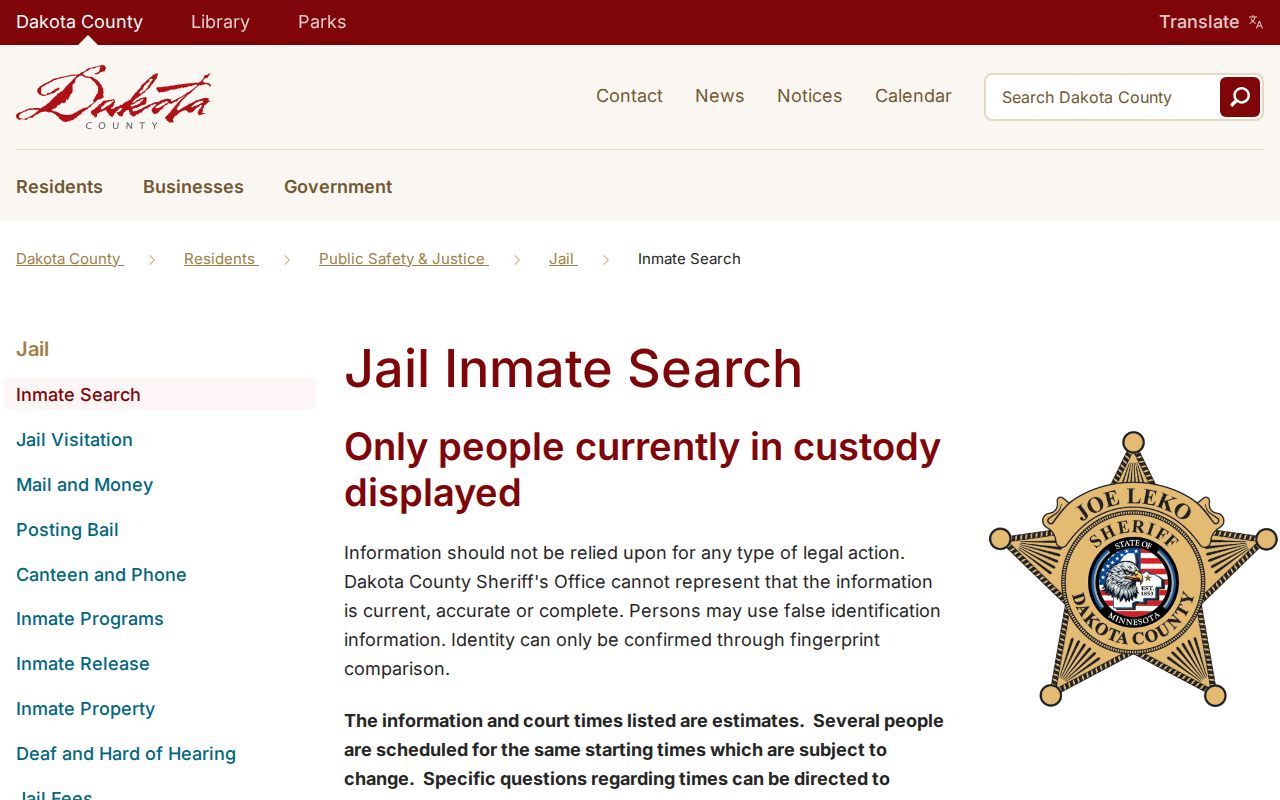
The custody fields answer one narrow question. They cannot show where a person ordinarily lives in South St. Paul, nor sketch a fuller resident history.
For state correctional jurisdiction, turn to the Minnesota DOC individual and registrant search.
DOC results carry their own disclosure limits. Statuses change, so keep the custodian and search date attached to anything you save from the directory.
South St. Paul License Records
A state license or business filing proves a professional record, not a household. Minnesota's umbrella License Minnesota search links out to participating boards and agencies. DLI offers a guest lookup by license or registration number plus other criteria for its categories. Other boards differ. Each keeps its own fields, status rules, and refresh cycles. A hit in one agency says little about another.
Record the agency, license number, status date, and category with every result. Treat the state license search page as a gateway only. The issuing agency's own result controls.
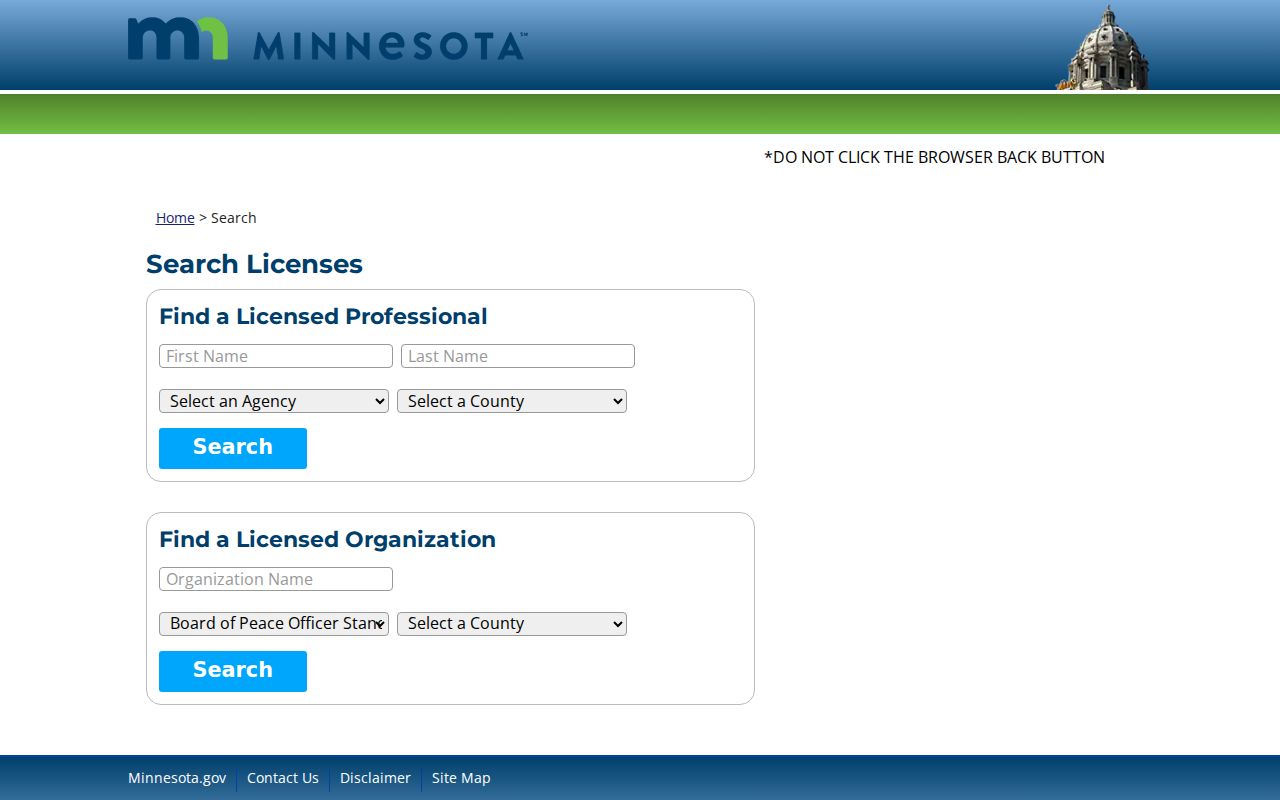
The state interface is a record-by-agency gateway. It is not a comprehensive South St. Paul residents directory roll.
South St. Paul Property Watch
Dakota County Property Watch is a recording alert service. It is not a tool for rebuilding the past. It looks forward. A subscriber supplies a name, an entity, or a property with its legal description. An email address is also required. When a future recording matches, the county sends an alert. Each notice carries the party name, the recorded date, and the document number. The document type appears in it as well. Common names can trigger plenty of alerts. A broad watch may get noisy. Treat the alert as a way to monitor a lawful property interest. If a flagged document matters, order the underlying recording from the county.
The Property Watch page posts the current enrollment instructions. Reread them before signing up. Older deeds, missing images, and pre-index material call for other routes. RecordEASE, the recorder's research options, the Lawshe Museum, DCHS, SPPL, and Minnesota Historical Society collections all serve different pieces of that history. For anyone tracing past residents of South St. Paul through property rolls, these channels fill the gaps a watch service cannot.
Note: A name in a recording notice signals a document relationship, not necessarily a current South St. Paul resident.